Seeing Easter Through Art
Four works from different eras that help us notice resurrection in new ways

Easter is a season that has inspired artists for centuries. Long before photography or printed devotionals, painters and sculptors helped people imagine the story of resurrection. Their work offered visual language for wonder, grief, recognition, and joy.
One of the gifts of public domain art is that we can still sit with these works today, quietly, attentively, allowing them to deepen our understanding of the Easter story.
Below are four pieces from different eras. Each approaches resurrection differently. Each invites us to slow down and notice something we might otherwise miss.
The Resurrection — Piero della Francesca (c. 1463)
#/media/File:Resurrection.JPG)
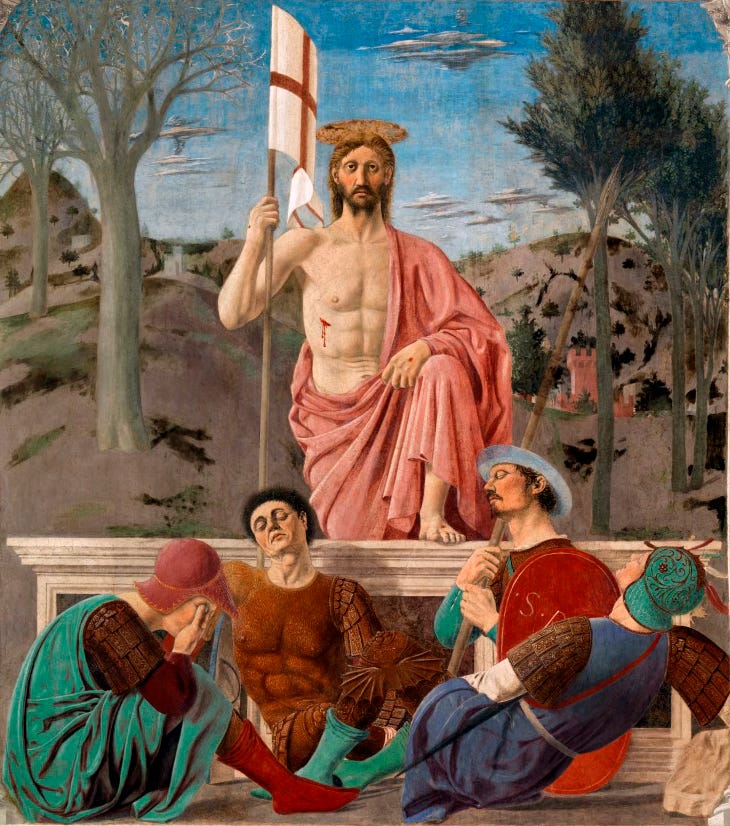
Painted during the Italian Renaissance, this image shows Christ rising from the tomb while soldiers sleep below. The contrast is striking: stillness below, awakening above.
Christ stands between two landscapes, one bare and winter-like, the other green and alive. The painting quietly suggests what Easter proclaims: the world itself is turning from death toward life.
Questions for reflection
Where do I see signs of awakening in my own life right now?
What parts of my life feel like winter, and where might new growth already be beginning?
What does resurrection look like when it arrives quietly?
The Women at the Tomb — William-Adolphe Bouguereau (1890)
_-_Le_saintes_femmes_au_tombeau_(1890)_img_2.jpg)
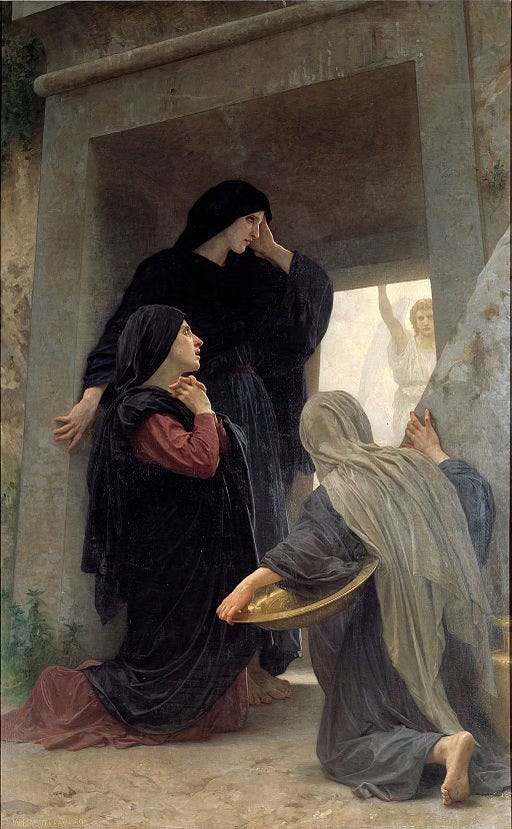
This nineteenth-century painting captures the moment when the women arrive at the tomb and discover it empty. Their gestures tell the story: surprise, confusion, awe.
The angel’s calm presence contrasts with their uncertainty. Resurrection has happened, but understanding takes time.
Questions for reflection
When have I experienced good news that was difficult to believe at first?
Where might I still be standing at the tomb, trying to understand what has changed?
What emotions arise when I imagine the women encountering the empty tomb?
The Supper at Emmaus — Caravaggio (1601)
#/media/File:Caravaggio_—_Supper_at_Emmaus.jpg)
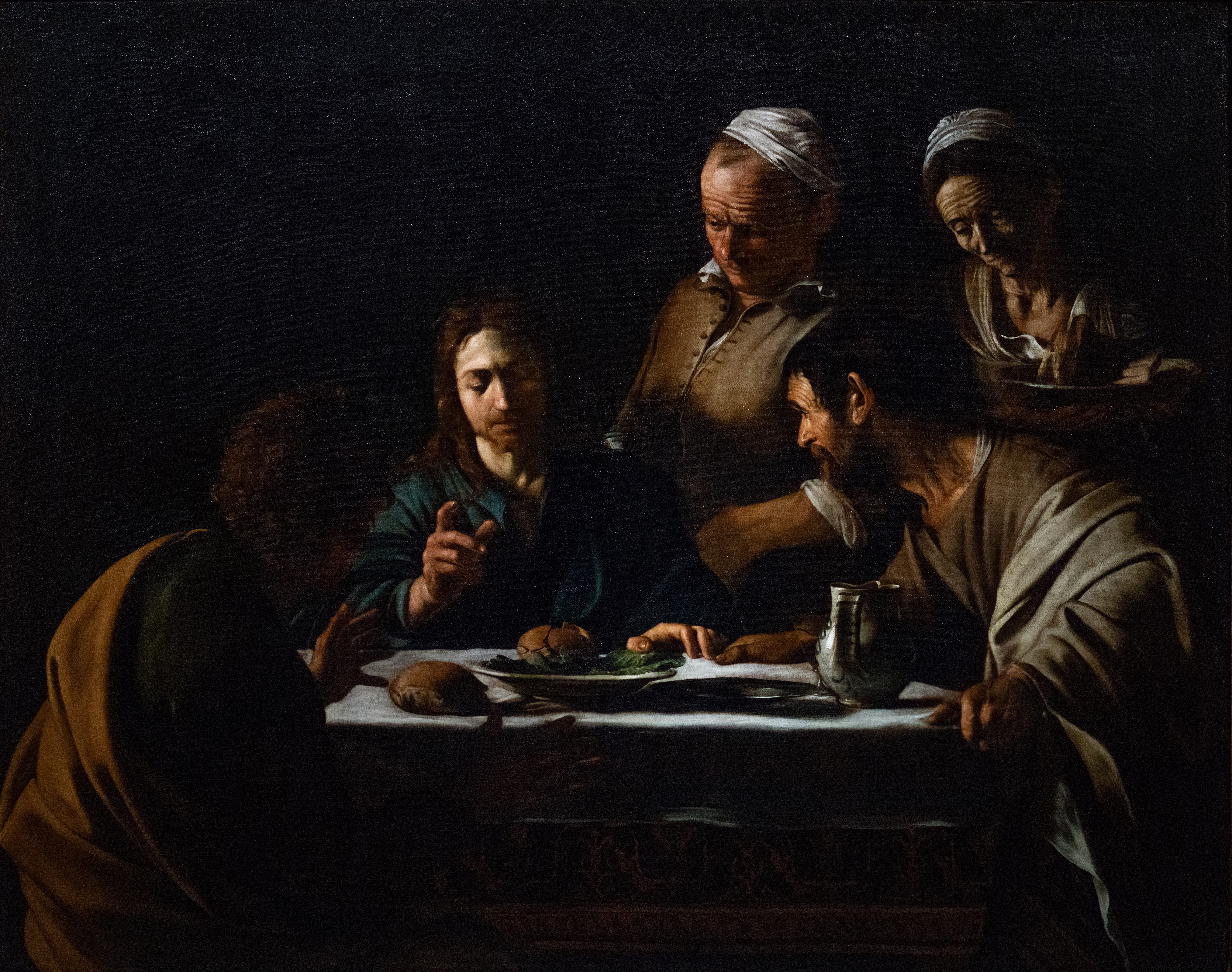
In this Baroque masterpiece, two disciples suddenly recognize the risen Christ while sharing a meal. The moment of realization bursts from the canvas, their arms outstretched, chairs tipping, bodies leaning forward.
Caravaggio captures a profound truth of Easter: recognition often happens in ordinary places.
A table.
Bread.
Conversation.
Questions for reflection
Where might I encounter Christ in everyday moments this week?
When have I only understood something important after it happened?
What ordinary practices help me notice holy presence?
Christ of Saint John of the Cross — Salvador Dalí (1951)
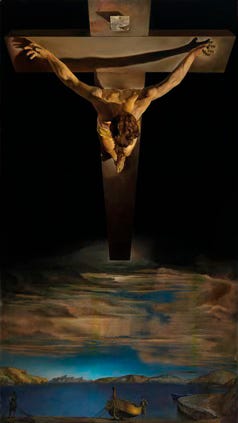
This twentieth-century painting by Salvador Dalí offers a strikingly modern interpretation of Christ on the cross. Viewed from above, the perspective shifts our understanding of the scene. Instead of focusing on suffering alone, the painting invites us to see the cross from a cosmic viewpoint, suspended between heaven and earth.
Many viewers experience this image as a bridge between crucifixion and resurrection. It holds both gravity and glory in the same frame.
Questions for reflection
What happens when I view the cross from a different perspective?
How does the promise of resurrection change how I understand suffering?
Where might God be inviting me to see familiar stories in a new way?
A Visual Language for Resurrection
Artists across centuries have tried to capture what words alone struggle to express: the mystery that life has overcome death.
Their paintings remind us that Easter is not only a proclamation. It is also something we learn to see.
In sleeping soldiers and waking landscapes.
In surprised women at an empty tomb.
In bread broken at an ordinary table.
In a quiet garden at dawn.
In new perspectives that widen our understanding.
Perhaps this Easter season, one small practice might simply be to look closely, to allow art, color, and story to open our attention to resurrection already unfolding around us.
With care,
Jenny
A wonderful visual, narrated, applicable journey.